

How long does it take to build a large LEGO Star Wars set? The useful answer is not one fixed number. A large build may take one long day, several multi-hour sessions, or shorter sessions spread across a week or more. The total depends on the set, your experience, how organized your workspace is, how often you take breaks, and whether you need to correct mistakes along the way.
For most builders, the better way to plan a big LEGO project is by comfortable building sessions rather than by chasing a universal hours-per-piece formula. LEGO’s own adult-building guidance recommends setting aside regular building time and even using bag numbers as session goals instead of racing against the clock.
If this is your first major project, start with our guide to preparing for a large LEGO build before opening Bag 1. A good workspace can save more time than trying to build faster.
How Long Does a Large LEGO Star Wars Set Usually Take?
There is no single normal build time for a large LEGO Star Wars set. Community reports vary widely even for similar-size UCS projects. Some builders finish a model over a weekend. Others prefer a few hours at a time and stretch the experience across several days or weeks.
That variation is expected. LEGO describes large adult-focused sets as experiences worth taking time with, and its own building advice encourages people to schedule sessions around real life. Numbered bags make this easier because each bag group gives you a natural stopping point.
So if you are planning a big build, think in terms of multiple sessions first. The exact hour count matters less than knowing you have enough time and space to stop without disrupting the project.
Does Piece Count Tell You How Many Hours a LEGO Set Will Take?
Piece count gives you a rough sense of scale, but it is not a reliable stopwatch. Two sets with similar piece counts can feel completely different to build because the pieces may be used in very different ways.
One model may use many small plates and tiles for detailed surfaces. Another may rely on larger structural elements, repeated assemblies, or long Technic frames. Small decorative pieces often take more time to identify and place, while repetitive sections may become faster once you understand the pattern.
Piece count also says nothing about your personal pace. Some builders move quickly through instructions. Others pause to study the model, take photos, organize pieces, build with family, or simply enjoy the process. Tiny Force treats piece count as a scale indicator, not a build-time calculator.
What Makes One Builder Faster Than Another?
Experience helps, but it is only part of the equation. A builder who already recognizes Technic connections, mirrored assemblies, orientation changes, and common LEGO building patterns may move faster than someone seeing those ideas for the first time.
Organization matters just as much. If the active pieces are easy to scan, less time is spent searching. If several bag groups are mixed together across a crowded table, the same instruction step can take much longer.
Attention can matter more than raw speed. A fast builder who misses a connector or reverses a subassembly may lose far more time rebuilding later. Our guide to how hard LEGO UCS sets are to build explains why patience and careful checking are often more important than advanced experience.
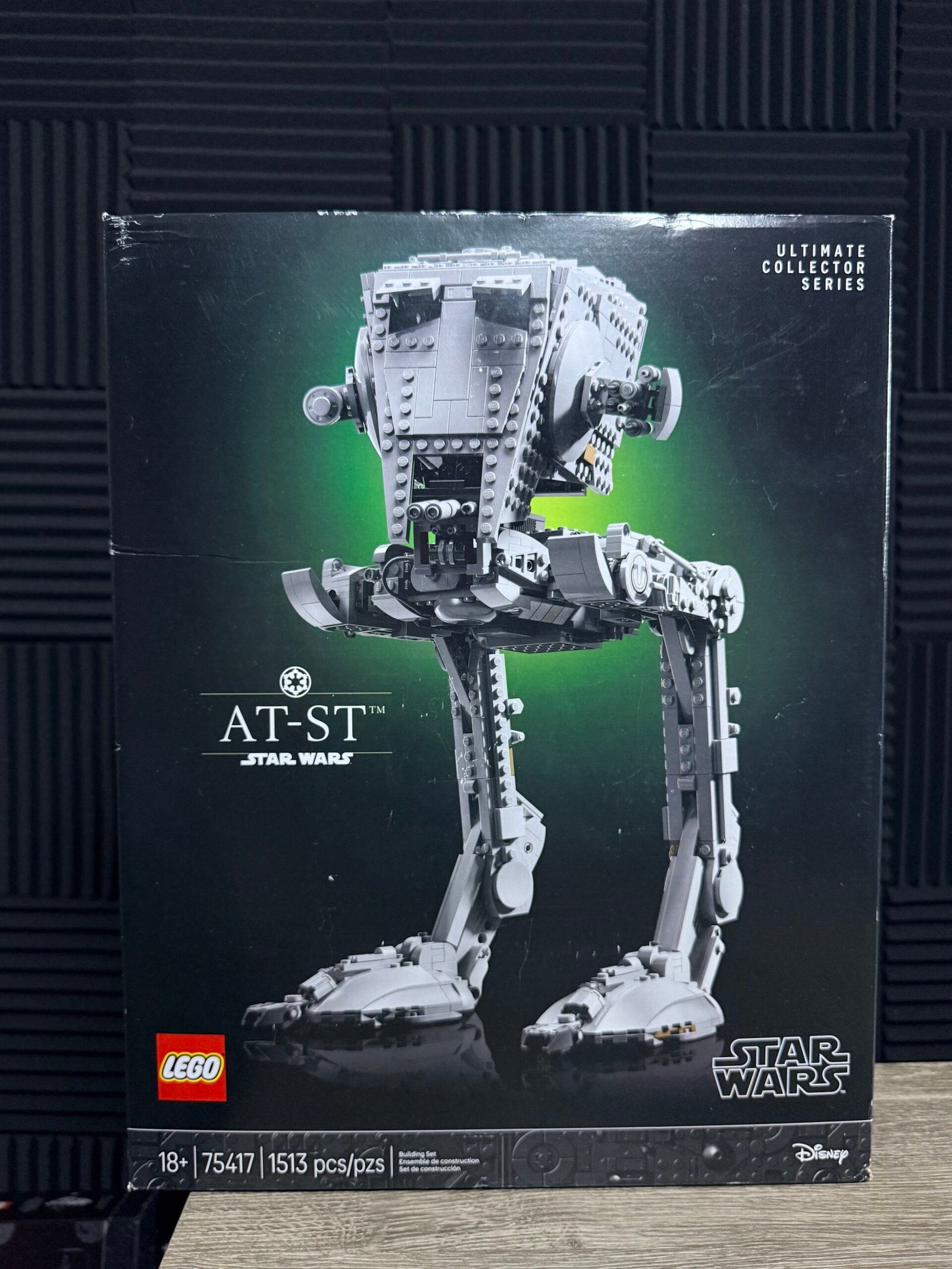
Should You Build a Large LEGO Set in One Sitting?
You can, but you usually do not need to. A long uninterrupted session can be fun when you have the time and energy, but fatigue makes it easier to overlook orientation, skip a piece, or keep going when something no longer looks right.
LEGO’s own building guidance suggests scheduling time that fits your routine. It even recommends deciding which bag numbers you want to complete in a session if you do not want to build against a clock.
For a huge set, that is often the better approach. Finish a bag group or major subassembly, tidy the active pieces, mark your place, and come back when you are ready. The goal is not to prove that the set can be completed in one day. The goal is to enjoy the project without creating avoidable mistakes.
How Long Should Each Building Session Be?
There is no required session length. Thirty minutes can be enough for a quick evening build. A free weekend might give you several hours at a time. The right session is long enough to feel satisfying without making the build feel like work.
LEGO gives half-hour sessions as one example of how adults can fit building into a busy schedule. The company also recommends bag-number goals when time is limited. Those examples are useful because they shift the focus away from speed and toward manageable progress.
A natural stopping point matters more than the clock. Ending after a numbered bag group usually makes restarting easier because the current pieces, instructions, and completed structure are all in a clear state.
Does Organizing LEGO Pieces Make the Build Faster?
Good organization can reduce wasted time, but over-sorting can create extra work. Modern LEGO sets already divide the project into numbered bags, so you usually only need to organize the pieces for the current stage.
Shallow trays, bowls, or containers make pieces easier to see without forcing you to separate every color and element. Keeping unopened bags away from the active workspace also reduces clutter and makes it easier to pause between sessions.
Our guide to organizing LEGO pieces during a large build covers numbered bags, trays, spare pieces, and simple restart systems in more detail.
How Much Time Do Building Mistakes Add?
Sometimes almost none. Sometimes a lot. A misplaced tile on the outside of a model may take seconds to fix. A missed connector buried inside a large frame may not reveal itself until several later sections fail to line up.
This is why the fastest-looking build is not always the fastest overall. Checking the parts callout and orientation at each step can feel slower in the moment, but it reduces the chance of a major teardown later.
If something suddenly refuses to fit, stop and compare the model with the instructions. Forcing the connection is usually less efficient than finding the earlier mistake.
Do UCS Sets Take Longer Than Regular LEGO Star Wars Sets?
They often do because UCS sets tend to be larger, more detailed, and more involved, but there is no fixed multiplier. LEGO describes Ultimate Collector Series models as detailed, challenging display builds, which naturally tends to create a bigger time commitment than a small play-focused set.
The practical commitment also grows with the model. A UCS build may need a larger table, more completed sections waiting nearby, more careful lifting, and more sessions before the model is complete.
If you are deciding between formats, our UCS vs. regular LEGO Star Wars sets comparison explains how build commitment differs from the broader LEGO Star Wars range.
Can You Estimate Build Time From Online Reports?
Use online build times as examples, not promises. Community reports are useful because they show the range of real experiences, but each number describes one builder, one set, and one set of conditions.
For example, one first-time UCS builder reported roughly seven hours over two days. Other builders discussing large UCS models describe several multi-hour sittings, while some much larger projects are reported in the 20-hour-plus range. Those numbers show why a universal estimate is difficult.
Your own build may be faster or slower because you pause more often, build with another person, sort differently, photograph the process, make fewer mistakes, or simply prefer a relaxed pace. Community time reports are best used to understand the range, not to set a deadline.
What About the Very Largest LEGO Star Wars Sets?
At the extreme end of the range, the project becomes about more than hours. Very large models require enough table space to keep the work stable, room for completed sections, and a plan for where the finished model will go.
The UCS Executor Super Star Destroyer 75457 is a good example. LEGO says the model contains 6,130 pieces and measures more than 53.5 inches long. A footprint like that can affect your pace simply because rotating, supporting, and storing the build takes more care.
Our Executor 75457 display-space guide shows why physical size belongs in the planning conversation before you start.
How Should You Plan a Multi-Day LEGO Build?
Start by giving the project a place where it can remain undisturbed. If the table has to be completely cleared every evening, each session gains extra setup and teardown time. A stable workspace lets you stop naturally without packing the entire build away.
Keep the current bag group together, store spare pieces in one small container, and leave unopened bags separate. Before ending the session, make sure the last instruction step is complete and that any loose subassemblies have a safe place to sit.
This also makes the project easier to share with family. You can build when time is available without feeling that the entire set has to be finished before the room can return to normal.
A Simple Way to Estimate Your Own Build Schedule
- Use online times only as examples. Do not treat somebody else’s pace as your deadline.
- Look at the numbered bag groups. They give you natural session boundaries.
- Decide how long you actually enjoy building at once. Thirty minutes, an hour, or several hours can all work.
- Leave margin for mistakes and breaks. A relaxed schedule is easier to maintain than an artificial target.
- Keep the workspace ready between sessions. Less setup means more actual building time.
- Do not rush the final stages. Large assemblies can become physically awkward near the end of the build.
If you know you enjoy one or two bag groups per sitting, you already have a more useful planning tool than a generic hours-per-piece estimate.
Next Steps: Build at a Pace You Actually Enjoy
A large LEGO Star Wars set may take several hours, several long sessions, or many shorter sessions across days or weeks. There is no single correct build time because the experience changes with the model and the person building it.
The better goal is consistency. Set up a good workspace, use the numbered bags, stop at clean checkpoints, and build slowly enough that you are still enjoying the project when the final pieces go on.
Explore The Holocron for more Tiny Force guides on large LEGO Star Wars builds, UCS sets, organization, display, cleaning, and moving finished models.