

LEGO Star Wars UCS sets have a reputation for being difficult, but “hard” is not the same thing as “only for expert builders.” The Ultimate Collector Series is designed to be detailed, challenging, and display-focused, yet the building process still follows LEGO’s normal step-by-step instruction system.
For most beginners, the real challenge is not a single impossible technique. It is the combination of a longer build, more pieces, larger subassemblies, repeated details, orientation changes, structural sections, and the need to stay organized over many sessions.
If you are still deciding whether UCS is the right format for you, our UCS vs. regular LEGO Star Wars sets guide explains how the series differs in display focus, scale, difficulty, play features, and price.
Are LEGO UCS Sets Actually Hard to Build?
They can be challenging, but most UCS sets are difficult because of scale and commitment rather than because every step is technically advanced. LEGO describes Ultimate Collector Series models as detailed, unique, and challenging builds made for display. That tells you to expect more involvement than a small playset, not an unsolvable puzzle.
The instructions still break the model into manageable steps. You are shown which pieces to use and where they go. The challenge increases because a mistake can be easier to miss when the model is large, and correcting it may require more backtracking if you do not notice it right away.
A first-time UCS builder should expect to slow down, check orientation carefully, and treat the project as a series of smaller sessions rather than one giant build.
What Makes a UCS Build Feel More Difficult?
Several things can make a UCS build feel harder than a typical smaller LEGO Star Wars set. The most obvious is duration. A larger model may involve many more numbered bags, more repetition, and more completed sections sitting on your table at the same time.
Large sets also give designers more room to use angled construction, internal frames, Technic elements, layered panels, mirrored sections, and detailed surface work. None of those ideas is automatically difficult by itself, but the combination can demand more concentration.
Community discussions from first-time UCS builders often describe the experience as manageable but easy to make mistakes in if you rush. Builders also regularly mention display space and the physical size of the finished model as part of the challenge, which shows that “difficulty” extends beyond the instructions themselves.
Do You Need Advanced LEGO Experience Before Building UCS?
No. You do not need years of advanced building experience before starting a UCS set. If you can follow LEGO instructions carefully, recognize piece orientation, and stay patient through a long project, you already have the core skills you need.
Experience does help with confidence. Builders who have completed several medium or large sets may be quicker at spotting mirrored assemblies, Technic connections, unusual angles, and places where an earlier mistake has changed the shape of a later section.
If your first UCS set is also your first large LEGO project, the biggest adjustment may simply be learning how to manage the build over time. Our large-build preparation guide covers workspace, lighting, numbered bags, storage, and planning before Bag 1.
Are Some UCS Sets Easier Than Others?
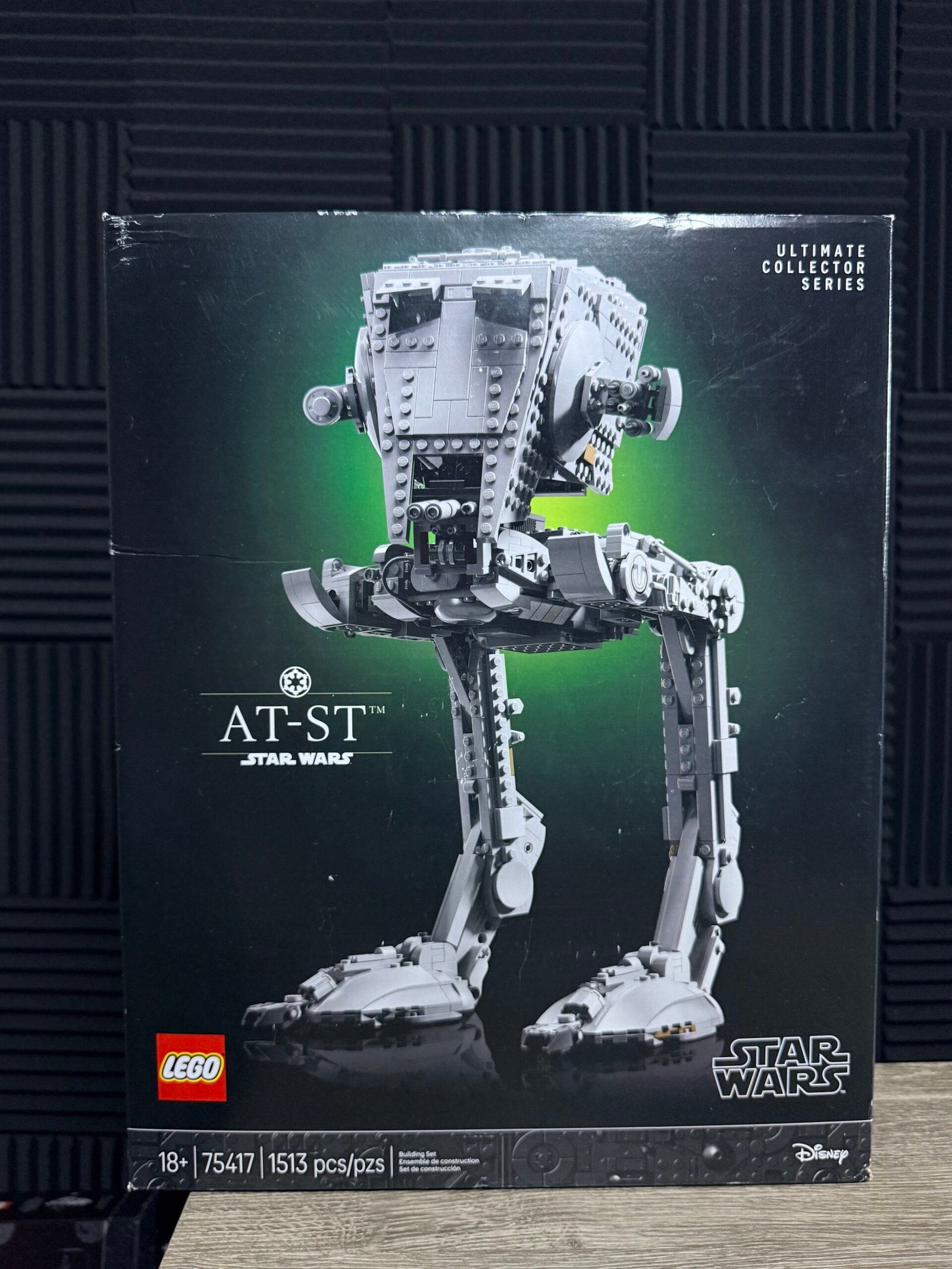
Yes. UCS is a series, not one fixed difficulty level. A smaller model with a compact footprint may be easier to manage than a huge capital ship or location set simply because there are fewer pieces, fewer large subassemblies, and less physical strain while building.
But piece count is not a perfect difficulty score. A smaller model can still use tricky angles or repeated sections, while a larger model may rely on straightforward repetition for long stretches. The subject and construction style matter as much as the number on the box.
That is why “Which UCS set is easiest?” does not have one permanent answer. It is more useful to ask whether a specific model matches your patience, available space, and preferred kind of building.
What Kinds of Mistakes Do Beginners Make on UCS Builds?
The most common problems are usually ordinary LEGO mistakes amplified by a larger project: placing a piece one stud off, reversing an assembly, missing a small connector, using the wrong length Technic pin or axle, or overlooking one piece in the parts box for a step.
On a small set, the problem may reveal itself almost immediately. On a UCS model, several later sections can sometimes build correctly around the mistake before something finally stops lining up.
The best prevention is simple. Check the parts callout, confirm orientation before pressing pieces firmly into place, and compare the shape of the model with the instruction image before moving to the next major section. Slowing down is usually faster than rebuilding later. Our guide to avoiding mistakes during a large LEGO build turns those checks into a repeatable routine. If a required part appears to be missing rather than misplaced, use our guide to handling a missing LEGO piece during a large build before you continue.
Does Piece Count Tell You How Hard a UCS Set Will Be?
No. Piece count tells you something about scale and commitment, but not enough to predict difficulty by itself. Thousands of small plates used for surface detail can create a very different experience from fewer large structural pieces.
The current UCS range makes that clear. LEGO’s Executor Super Star Destroyer 75457 contains 6,130 pieces and stretches more than 53.5 inches long, making physical space a major part of the build. Other UCS models use fewer pieces but may still include challenging shaping or large sections that need careful support.
If the finished footprint worries you more than the construction itself, our UCS Executor 75457 space guide shows how much the real-world dimensions can matter.
How Much Does Organization Affect UCS Difficulty?
A lot. A well-organized large build can feel much easier than the same set on a crowded table. Numbered bags already reduce the number of active pieces, so there is usually no need to dump thousands of bricks into one giant pile.
Use shallow trays or bowls for the active bag group, keep unopened bags somewhere separate, and give completed sections a safe place to sit. If you stop between sessions, leave the current pieces and instructions in a state that makes restarting obvious.
Our guide to organizing LEGO pieces during a large build goes deeper into numbered bags, trays, spare pieces, and restart systems.
Should You Build a UCS Set in One Sitting?
Usually no. There is no prize for finishing a large model as quickly as possible. Breaking the build into sessions can reduce fatigue and make it easier to notice mistakes.
Community builders frequently describe completing one or two bag groups at a time, especially on their first UCS set. That approach keeps the project moving without turning a hobby into an endurance test.
Stop at a natural point when possible, such as the end of a numbered bag group or completed subassembly. That gives you a clean restart point and reduces the chance of forgetting which loose pieces belong to the current step.
Is the Physical Size of the Model Part of the Difficulty?
Absolutely. A large UCS set can become physically awkward long before the instructions become confusing. You may need to rotate a wide section, support a long frame with both hands, connect two heavy modules, or move the model to reach the next building angle.
This is one reason the build surface matters. A project that barely fits on the table gives you less room to turn the model safely or place completed sections nearby.
Once complete, the same issue continues. Large display models may be harder to lift, reposition, clean, and transport. Our guide to moving a large LEGO set safely covers what to do when the finished build eventually has to travel.
Are UCS Sets Too Hard for Younger Builders?
Age alone does not determine whether someone can complete a UCS set. LEGO currently markets many UCS models toward adults, but an experienced younger builder may be perfectly capable of following the instructions and enjoying a long project.
The better questions are whether the builder has the patience for a long sequence, enough space to work safely, and the ability to handle larger sections without damaging them. An adult who has never built a large LEGO set may find the same challenges unfamiliar.
For families, the build can also be shared. One person can help check orientation, organize pieces, or support a large section without taking over the entire project.
How Do You Know If You Are Ready for a UCS Set?
You are probably ready if you can follow LEGO instructions carefully, stay interested in a multi-session build, and give the project enough physical space. Advanced techniques are not required to be known prior to the build as the instructions will help you through the process.
You should also be comfortable stopping when something does not look right. Forcing a section into place is usually a sign to go back and check the previous steps rather than press harder.
If you are still choosing your first model, our first LEGO Star Wars UCS set guide covers budget, subject, space, build commitment, and display planning before you buy.
A Beginner Checklist for Your First UCS Build
- Check the finished dimensions first. Know where the model will be built and displayed.
- Clear a stable workspace. Leave room for active bags and completed sections.
- Work with numbered bags. Do not create a bigger sorting problem than necessary.
- Check orientation carefully. Large builds can hide small mistakes for many steps.
- Use the parts callout. Make sure every required piece is accounted for before moving on.
- Take breaks. Build in sessions instead of rushing through fatigue.
- Support large sections. Do not lift the model by decorative or fragile areas.
- Expect some backtracking. Finding and correcting a mistake is part of building, not proof that you cannot handle UCS.
The goal is not to make the build feel easy. The goal is to make the challenge enjoyable and manageable.
Next Steps: Treat UCS as a Long Project, Not a Test
LEGO UCS sets can be harder than smaller LEGO Star Wars sets, but they are not reserved for expert builders. The difficulty usually comes from scale, time, organization, structural sections, and the need to stay attentive across a long build.
If you work slowly, keep the active pieces organized, check orientation, and take breaks, a first UCS build can be challenging without being overwhelming. Choose a subject you genuinely want to build, then give the project the space and time it deserves.
Explore The Holocron for more Tiny Force guides on UCS, large builds, organization, display, and long-term care.