
If you have looked at the biggest LEGO Star Wars sets, you have probably seen three letters again and again: UCS. They appear beside enormous starships, detailed display models and collector plaques. Their prices can also look very different from those of a typical LEGO set. So what does UCS mean, and what makes a LEGO Star Wars set part of the series?
UCS stands for Ultimate Collector Series. LEGO created this long-running line around highly detailed Star Wars models and advanced building experiences. The series began in 2000. Since then, it has grown to include large-scale versions of some of the most recognizable ships and vehicles in Star Wars.
What Does UCS Stand for in LEGO Star Wars?
UCS means Ultimate Collector Series. LEGO describes the range as detailed display sets that recreate iconic parts of the Star Wars galaxy at an impressively large scale. Today, LEGO aims the UCS collection especially at collectors and adult Star Wars fans. These builders often want a substantial model to build and display.
That does not mean a younger, experienced builder cannot enjoy one. The design priorities simply differ from those of many smaller Star Wars sets. A UCS model generally offers a longer, more involved build. The finished model also puts greater emphasis on scale, detail and display presence.
The easiest way to think about UCS is to compare its priorities with those of a regular set. A standard LEGO Star Wars set may balance building, characters and play. A UCS set puts much more emphasis on recreating a Star Wars subject as a detailed collector model. Our UCS vs. regular LEGO Star Wars sets guide breaks down those differences in size, detail, display focus, play features, difficulty and price.
When Did LEGO Star Wars UCS Begin?
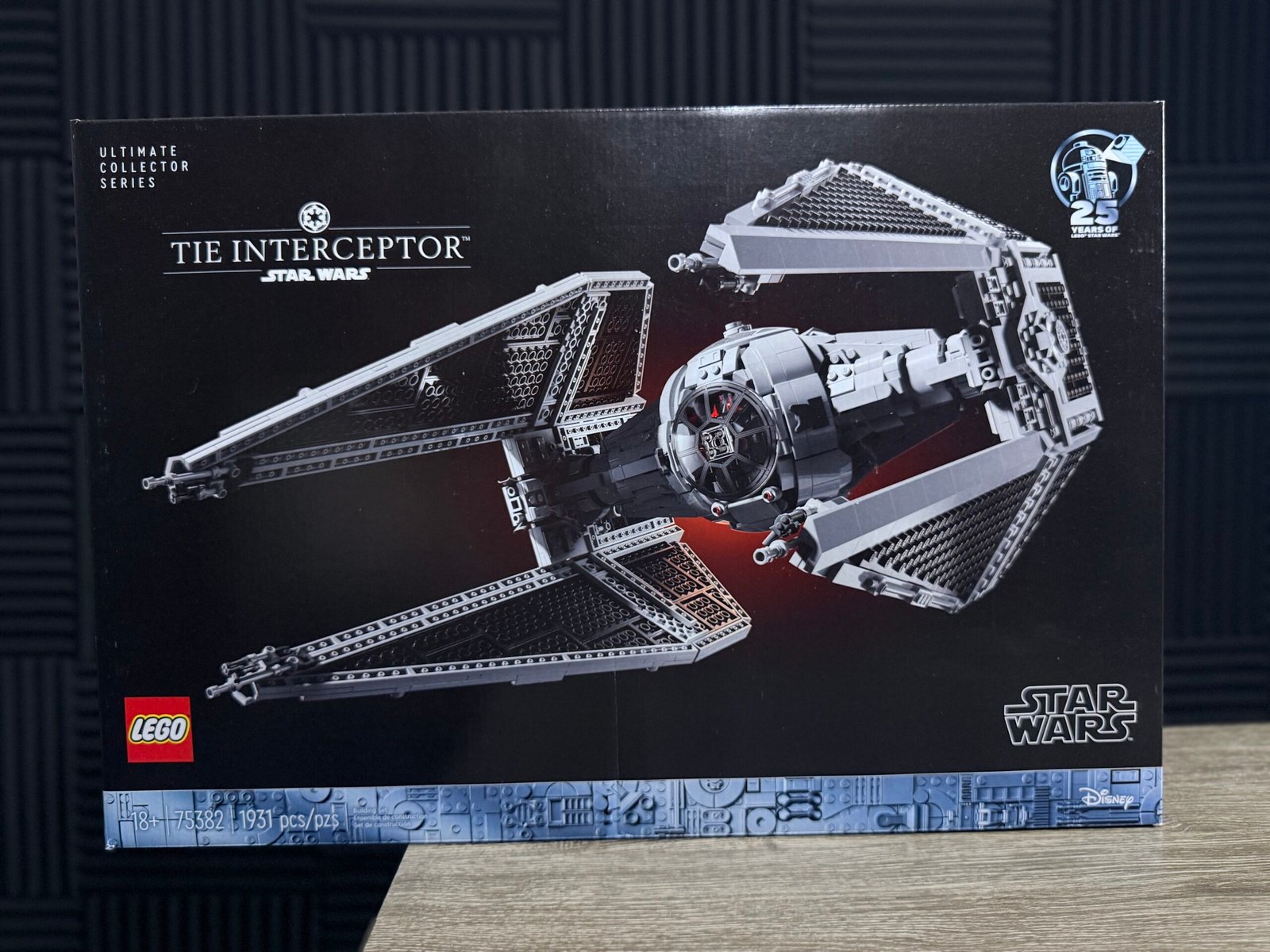
The Ultimate Collector Series dates back to 2000, just one year after the first LEGO Star Wars sets launched. According to LEGO’s own history of the series, the first two UCS models were the TIE Interceptor (7181) and X-wing Fighter (7191).
Those early models established an idea that still defines the series. LEGO could take a familiar Star Wars vehicle and give designers more room to recreate its shape at a larger scale. LEGO’s building-instructions archive lists the original X-wing at 1,304 pieces. It also used a Technic mechanism that opened its wings together. Both launch models were significantly larger than ordinary sets of their era.
The line has changed considerably since then. Designers now use more sophisticated building techniques, and LEGO has expanded its adult-focused catalog. LEGO has also revisited some Star Wars subjects in newer UCS versions. The core idea remains recognizable: these are ambitious Star Wars models designed to make an impression once complete.
What Makes a LEGO Star Wars Set a UCS Set?
No single piece-count rule automatically turns a set into UCS. Size matters, but being large is not enough. LEGO has released many substantial Star Wars sets across different formats. When classification matters, look at how LEGO officially identifies and markets the model rather than relying on brick count alone.
Several characteristics appear repeatedly across the series. UCS sets tend to emphasize detailed Star Wars recreations, advanced building experiences and display value. Many models also include dedicated display stands or information plaques. The exact presentation varies between sets and across different eras of the series.
This distinction matters because LEGO Star Wars includes other large display-oriented models. A big set is not automatically an Ultimate Collector Series set. Fans may also describe a model as “UCS-scale,” but that does not make it an official UCS release. For classification, LEGO’s official product description remains the safest reference.
Are UCS Sets Just Bigger LEGO Star Wars Sets?
Not exactly. A bigger scale gives LEGO designers more space for detail, but UCS involves more than enlarging the same model. Designers can use that extra scale for complex shaping, internal supports and surface detail. They can also recreate proportions that would be difficult to achieve in a smaller version.
That scale also changes the building experience. Large models can demand more workspace, time and attention to orientation or repeated structures. Once complete, the model’s physical footprint can matter as much as its piece count. It may fit comfortably on your building table but create a new problem when you need a permanent shelf.
That is why Tiny Force will treat large-build preparation and display as their own subjects in The Holocron. Understanding the set is only the beginning. Building and living with a large model are part of the experience too.
Are All UCS Sets for Adults?
LEGO currently positions the Ultimate Collector Series primarily toward adult collectors. Many current products carry an 18+ age recommendation. That recommendation communicates the intended audience and complexity, but it does not measure every builder’s ability. Individual experience can matter more than the number printed on the box.
Experience, patience, available space and interest all matter. An experienced younger builder may feel comfortable following a long instruction sequence. An adult who rarely builds LEGO might find the same project demanding. A better question is: “Am I ready for the size, time and concentration this particular build requires?”
That question becomes especially important when you choose a first UCS set. Price and piece count attract attention. Build complexity, physical dimensions and the model’s future display location can matter just as much. Our first LEGO Star Wars UCS set guide walks through those decisions before you start.
Is Every Large LEGO Star Wars Set UCS?
No. LEGO Star Wars includes several kinds of large or display-focused sets, so size alone does not determine the label. This distinction explains some of the confusion among fans about whether a particular model “counts” as UCS.
The cleanest approach separates official classification from fan shorthand. If LEGO identifies a set as part of the Ultimate Collector Series, it is UCS. Other models may still be large, advanced, collectible or display-oriented. Those traits alone, however, do not officially place a set in the series.
This approach also makes comparisons more useful. Instead of putting every large set into one category, compare the features that matter to you. Consider scale, display footprint, building techniques, minifigures, interior features, price and the Star Wars subject itself.
Why Do LEGO Star Wars Fans Care So Much About UCS?
For many fans, UCS sits at the intersection of two hobbies: building LEGO and collecting Star Wars. A finished UCS model can become a centerpiece instead of disappearing into a larger collection. LEGO describes the current range around collectible, impressively large display models. The series has now existed for more than a quarter century.
There is also a sense of progression. Someone may start with smaller Star Wars sets and later want a longer, more detailed project. Community discussions about a “first UCS set” often focus on budget, difficulty and favorite Star Wars eras. Available display space also comes up frequently. Choosing UCS involves much more than deciding which ship looks coolest on the box.
For Tiny Force, that is where the subject gets especially interesting. The finished model matters, but so does everything between opening the box and finding its permanent home.
What Should You Know Before Your First UCS Build?
Start with the dimensions, not just the piece count. Make sure you have enough room to build the model and somewhere safe to display it afterward. A wide-winged starfighter and a long capital ship can create very different space problems. The new UCS Executor 75457 display-space guide is a good example of why finished dimensions matter so much. Piece counts alone may not reveal that difference.
Next, think about how you like to build. Large projects reward organization and patience. Keep bags, loose pieces and completed sections under control. Our large LEGO build preparation guide walks through the setup before Bag 1 so a long build is easier to manage across multiple sessions.
Finally, choose a subject you actually care about. UCS models can require a serious commitment of money, time and space. Do not choose one simply because it carries the UCS label. Choose it because you want the experience of building that particular piece of the Star Wars galaxy.
Next Steps: Keep Exploring the Ultimate Collector Series
UCS means Ultimate Collector Series, LEGO’s premium line of detailed LEGO Star Wars models focused on advanced construction and display. The series began in 2000 with the TIE Interceptor (7181) and X-wing Fighter (7191). Since then, UCS has become one of the most recognizable parts of LEGO Star Wars collecting.
But the three letters only tell you where to start. Before your first large Star Wars build, ask a few practical questions. How difficult will it be? How much room will it take? How should you organize the build? Most importantly, where will you put it when you’re finished?
That is exactly what we’ll keep exploring in The Holocron. Explore the latest Tiny Force guides there as the collection grows.