

Moving a large LEGO set is different from moving an ordinary decoration. A finished UCS ship, modular building, walker, or large display model may be strong in some places and surprisingly fragile in others. The safest plan is to reduce stress on the model, contain any pieces that do come loose, and prevent the set from sliding or flexing during transport.
For most large builds, you do not have to choose between “move it completely assembled” and “take it down to individual bricks.” A middle ground often works better: remove vulnerable details, separate obvious modular sections when the design allows it, bag and label those pieces, then move the main structure in a rigid container with padding around it.
If you are still deciding where the set will live after the move, start with our guide to displaying a huge LEGO Star Wars set. Knowing the destination first helps you avoid moving the model more times than necessary.
Should You Move a Large LEGO Set Fully Assembled?
Sometimes, but not automatically. The answer depends on the model, how far it is traveling, how it will be handled, and whether the set has obvious removable sections. A sturdy model going across the room is a very different problem from a delicate UCS ship going across town in a moving truck.
Community discussions around large LEGO moves consistently describe partial disassembly as a useful compromise. Builders often remove wings, antennas, engines, minifigures, turrets, or other snag-prone details before packing the main structure. Some large sets are already designed around major modules that can be separated without taking the entire model apart.
If the model flexes when lifted, has large unsupported projections, or cannot fit safely into a container while assembled, breaking it into larger sections is usually more sensible than forcing the whole build to travel as one piece.
Photograph the Set Before You Touch It
Take several clear photos before moving anything. Photograph the whole model from the front, back, sides, and above, then take closer pictures of fragile areas and any sections you plan to remove.
The photos give you a quick reference if a small part comes loose later. They are especially useful when the model has repeated details, mirrored sections, or decorative pieces that can be difficult to place from memory.
If you remove parts intentionally, keep each group together in a labeled bag. Write the set name or number and a short note such as “left wing,” “top antennas,” or “rear engines.” A few minutes of labeling can save a long reconstruction session after the move.
Remove the Parts Most Likely to Break Off
Before wrapping or boxing the model, look for anything that sticks out farther than the main body. Long antennas, cannons, minifigure accessories, thin wing tips, radar dishes, decorative rails, and loosely attached panels are common candidates.
Removing a small vulnerable section on purpose is better than having it snap off somewhere inside a moving truck. The goal is not to disassemble the build randomly. Remove only the parts that make the set difficult to support, contain, or protect.
Keep every intentionally removed piece in a bag assigned to that specific set. Do not mix loose parts from several models into one container, even if the move is short.
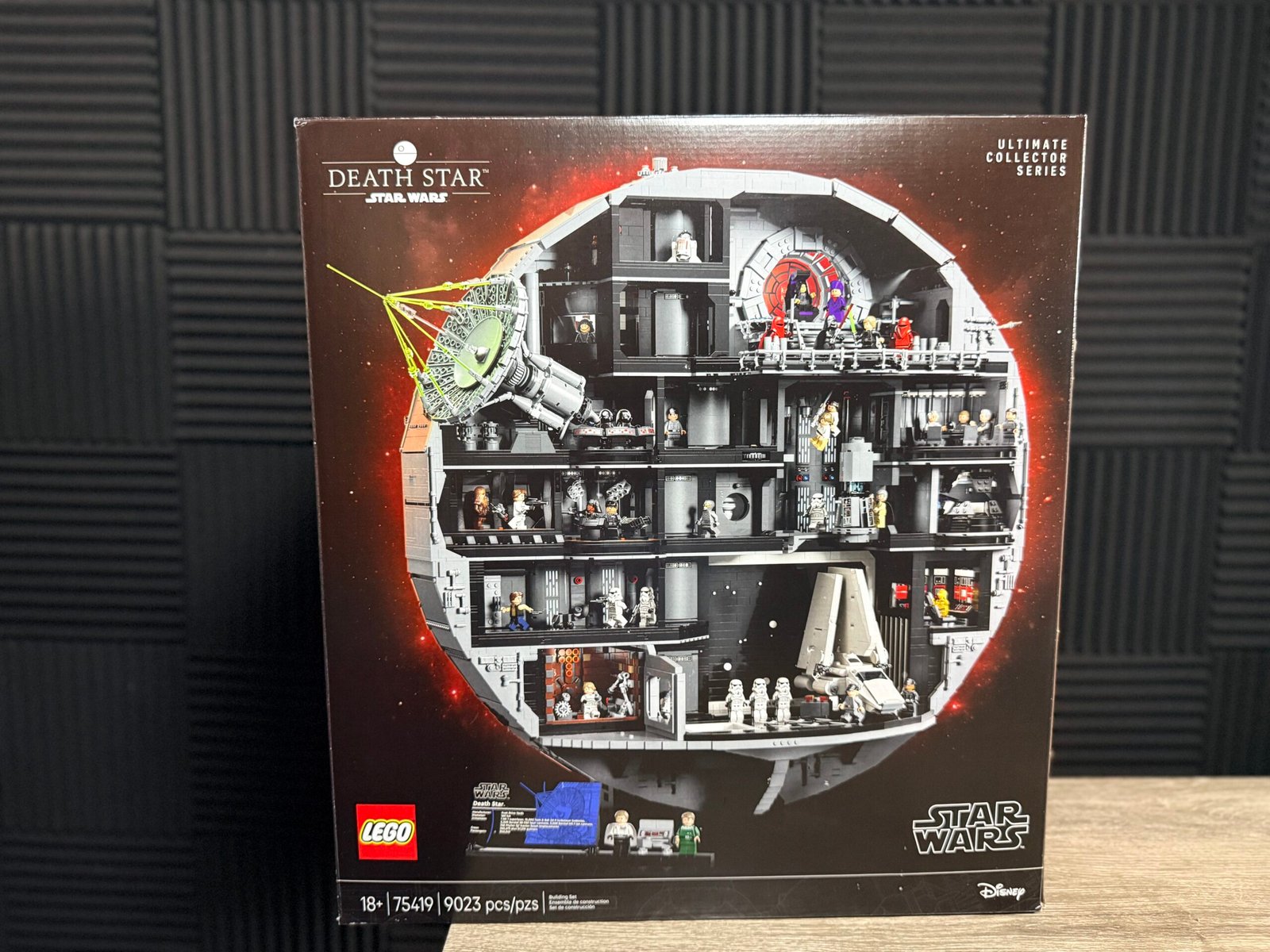
Contain the Set So Loose Pieces Cannot Disappear
Even a carefully packed LEGO model can shed a few pieces. One of the most useful precautions is to place the entire set, or each major section, inside a large clean plastic bag or liner before it goes into the box or tote.
The bag is not there to squeeze the build together. Its job is containment. If a tile, grille, antenna, or small detail comes loose, it stays with the correct model instead of disappearing into packing material, the car, or the bottom of a moving truck.
Some builders use stretch film directly around sets, but tight wrapping can put pressure on fragile projections. If you use film, avoid pulling it tightly across antennas, wings, rails, or other delicate areas. A loose containment bag plus proper padding is usually easier to control.
Use a Rigid Box or Tote With Padding Around the Model
The container should be large enough that the model does not press against the walls, but not so oversized that it can slide several inches in every direction. Use soft packing material around the set to limit movement without compressing fragile areas.
Bubble wrap, clean towels, foam, or other soft material can fill empty space around the model. Support the base and stronger structural areas first. Do not pack material tightly onto antennas, wings, turrets, or detailed surfaces just to make the box feel full.
Once packed, gently test the container before carrying it away. If the model can slide freely when the box moves a few inches, add support around the stronger areas until the load stays more stable.
How Should You Carry a Large LEGO Set?
Lift from the strongest structural points you can identify, usually low on the model and close to its center of mass. Avoid picking up a large set by a wing, tower, engine, decorative plate, display stand, or another section that was not designed to carry the full weight.
If the build is too wide or awkward for one person to control safely, use two people rather than stretching your arms around it and hoping nothing flexes. Agree on where each person will hold the model before lifting.
Move slowly and keep the path clear. Open doors first, move chairs out of the way, and know where the set is going before you lift it. Most preventable accidents happen when someone is trying to reposition the model while already carrying it.
How Should You Transport a Large LEGO Set in a Car?
If you have the option, a personal vehicle gives you more control than mixing the set with ordinary moving boxes. Place the packed model on a flat surface where it cannot slide, tip, or have anything stacked on top of it.
Keep heavy boxes, tools, furniture, and other hard objects away from the LEGO container. Sudden braking matters just as much as road vibration, so the box should be secured well enough that it cannot become a moving object inside the vehicle.
For an especially large or valuable model, a dedicated trip may be worth the inconvenience. Community builders frequently describe transporting their largest sets separately because it lets them control orientation and keep other cargo away from the build.
What About a Moving Truck or Long-Distance Move?
A moving truck adds more vibration, more handling, and more opportunities for other cargo to shift. For that kind of move, partial disassembly becomes more attractive. Large modules are easier to support and easier to pack than one oversized fragile structure.
Use a rigid container for each set or major section, label it clearly, and mark that nothing should be stacked on top. Keep the LEGO boxes away from heavy furniture or containers that could shift into them during transit.
If professional movers are involved, do not assume they know the model is fragile just because the box says LEGO. Explain that the container holds an assembled display model and should remain upright or in the specific orientation you packed it.
When Is Full Disassembly the Better Choice?
Sometimes the safest move is to take the set apart. That is especially true when the model is extremely delicate, cannot fit into a practical container, has already become structurally loose, or will be shipped through a carrier where you cannot control orientation and handling.
If you do disassemble, avoid turning the entire model into one giant mixed bag of pieces unless you actually want that rebuilding challenge. Separating the set into logical sections, or keeping parts grouped in a way that reflects the original build stages, can make reassembly much easier.
Before a future large build even begins, our large LEGO build preparation guide can help you think about workspace, storage, and where the finished model will eventually live.
What Should You Do When You Unpack the Set?
Open the container over a clean floor, table, or blanket so any loose pieces are easy to spot. Remove the main model first, then inspect the bag, padding, corners of the box, and bottom of the tote before throwing anything away.
Compare the model with the photos you took before the move. Reattach intentionally removed parts first, then deal with any pieces that came loose during transport. If several pieces came off one area, the before photos can help you identify their original positions.
Once the set is back in place, this is also a good time to clean it. Our guide to cleaning dust off LEGO sets without taking them apart covers soft brushes, tight spaces, and other assembled-set cleaning methods.
A Simple Checklist for Moving a Large LEGO Set
- Photograph the finished model. Capture the whole set and fragile details.
- Identify removable sections. Separate obvious modules when that makes the model safer to handle.
- Remove vulnerable details. Bag and label antennas, minifigures, weapons, wings, or other snag-prone pieces.
- Contain the model. Use a clean bag or liner so loose pieces stay with the correct set.
- Use a rigid container. Choose a box or tote that gives the model clearance without excessive empty space.
- Pad strong areas, not fragile details. Stop the model from sliding without compressing delicate pieces.
- Keep weight off the box. Never stack heavy cargo on top of an assembled LEGO set.
- Carry from structural points. Use two people when the model is too large for one person to control.
- Unpack over a clean surface. Check every bag, corner, and piece of padding before discarding it.
No method can guarantee that a large LEGO set will arrive with every piece still attached. The realistic goal is to keep the main structure safe, prevent lost pieces, and make any small repairs easy to identify.
Next Steps: Plan the Move Before You Lift the Set
The safest way to move a large LEGO set is to plan the move before the model leaves its shelf. Photograph it, remove fragile details, divide it into stable sections when useful, contain loose pieces, support the main structure, and keep other cargo away from it.
For a short move across the house, that may be all you need. For a long-distance move, more partial disassembly and stronger packaging can reduce the risk. The bigger and more awkward the model becomes, the more valuable preparation is.
Explore The Holocron for more Tiny Force guides on building, displaying, cleaning, and caring for large LEGO Star Wars sets.